NEWS
Aircraft Maintenance Training: How to Become an Aircraft Maintenance Technician
Aircraft maintenance is an essential field that ensures the safety and operation of aircraft, while also offering a range of opportunities for those looking to build a technical career in the aviation industry.
For those looking to become an Aircraft Maintenance Technician (AMT), also known as an aircraft mechanic, it is important to understand not only the training options available, but also key concepts such as EASA Part-147, Part-66, B1.1 and B1.2 categories, practical experience, and licensing requirements.
In this guide, we explain the main steps involved in pursuing this career path, as well as the different training options available at IFA Industries, an aircraft maintenance training organisation that is part of the IFA Group.

What does an Aircraft Maintenance Technician do?
Aircraft Maintenance Technicians play a fundamental role in ensuring the airworthiness and safety of aircraft.
Depending on their training, experience, licence category, and applicable authorisations, these professionals may carry out tasks related to aircraft inspection, maintenance, troubleshooting, repair, and the replacement of aircraft components and systems.
In Europe, the qualification and licensing pathway for these professionals is governed by EASA (European Union Aviation Safety Agency) regulations, particularly Part-66. For this reason, choosing the right training from the outset is an important decision for anyone looking to build a career in aircraft maintenance.
Two concepts frequently arise when researching aircraft maintenance training: Part-147 and Part-66. Although they are closely related, they refer to different aspects of the professional pathway.
Part 147: Aircraft Maintenance Training
Part-147 sets out the requirements applicable to approved organisations that provide aircraft maintenance training and conduct maintenance examinations within the scope of their approval.
IFA Industries is an approved aircraft maintenance training organisation, holding approval reference PT.147.003.
When choosing a training programme, it is therefore important to check not only whether the organisation holds a Part-147 approval, but also whether the specific course and category you are interested in are covered by the organisation’s approved scope.
Part 66: Aircraft Maintenance License
Part-66 establishes the requirements applicable to individual aircraft maintenance licences.
Training is just one of the steps required to obtain a licence.
To obtain an aircraft maintenance licence, applicants must meet the applicable requirements regarding knowledge, examinations, practical experience, and documentation, and subsequently submit their application to the competent authority.
In Portugal, this process is handled by ANAC – the Portuguese Civil Aviation Authority.
How do I obtain an aircraft maintenance license?
The pathway may vary depending on the category chosen and the candidate’s previous experience. However, there are some key steps that should be considered.
1. Choose the training category
The first step is to decide what type of aircraft and which area of maintenance you want to build your career in.
Among the available options are the B1.1 and B1.2 subcategories.
B1.1 – Turbine-Engine Aeroplanes
The B1.1 subcategory covers the maintenance of aeroplanes equipped with turbine engines, including jet and turboprop aircraft.
For those looking to build a career in the maintenance of aircraft operated by airlines and commercial operators, this may be an option worth considering.
B1.2 – Piston-Engine Aeroplanes
The B1.2 subcategory covers the maintenance of aeroplanes equipped with piston engines.
The choice between B1.1 and B1.2 should take into account the candidate’s career goals, the type of aircraft they intend to work on, and the opportunities available to subsequently gain relevant experience.
From course to license Part-66: the essential steps
After choosing the category, candidates must meet the training, knowledge, examination, and practical experience requirements applicable to their chosen pathway.
One option is to complete approved Part-147 training, either ab initio or through e-learning, which includes training and assessment in accordance with the scope of the organisation’s approval. There are also pathways based on completing Part-66 modules and examinations.
Training and examinations are only part of the process. Candidates must also gain and demonstrate relevant practical experience in aircraft maintenance, ensuring that the tasks performed and the required documentation are properly recorded.
What happens after the training?
Once the applicable requirements have been fulfilled, candidates can submit their Part-66 licence application to ANAC – the Portuguese Civil Aviation Authority.
AMT Ab Initio Course - theoretical and practical training
The Ab Initio Aircraft Maintenance Technician (AMT) programme is particularly suited to those looking for a structured pathway into aircraft maintenance from the very beginning.
The programme combines theoretical and practical training, examinations, and assessments applicable to the chosen pathway.
At IFA Industries, training pathways are available for the turbine-engine (B1.1) and piston-engine (B1.2) subcategories, as well as combined options, allowing candidates to choose the training programme that best suits their career goals.
This option may be particularly relevant for those looking to enter the aviation industry without prior training or experience in aircraft maintenance.
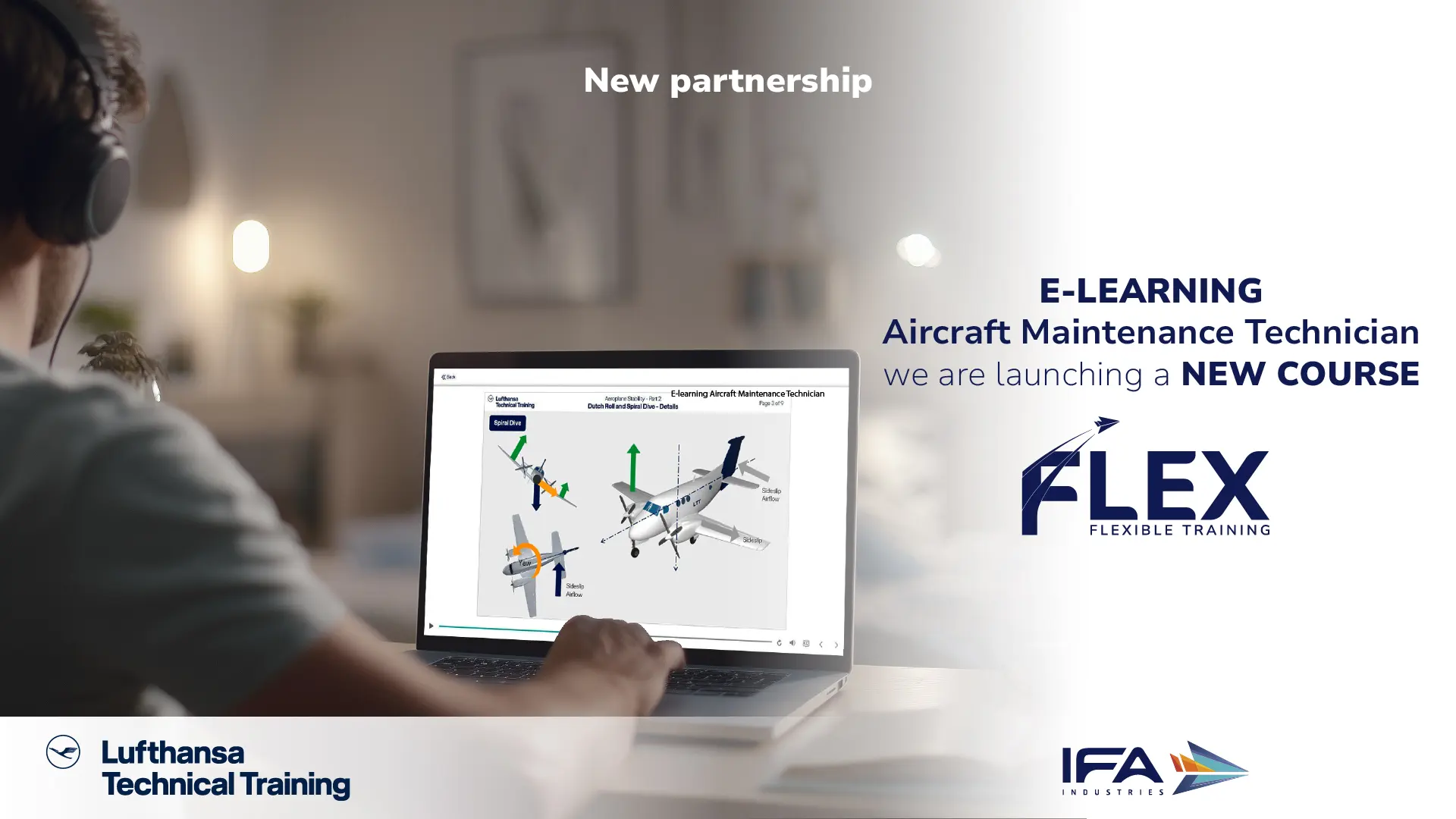
AMT FLEX – theoretical training in e-learning
For those seeking greater flexibility, TMA FLEX allows you to complete the theoretical component via e-learning, combining training with work or other responsibilities.Exams are taken in person in Lisbon and Viseu.This option is especially suitable for professionals who wish to continue working while advancing their training, without having to interrupt their professional activity.However, it is also important to plan the other steps necessary to meet the requirements for obtaining the license.
Examination Part-66
IFA Industries also offers the possibility of taking Part-66 module exams, individually or through module sets.
This alternative may be suitable for candidates who already have training, experience, or certain completed modules and need to complete specific requirements.
Before registering, it is recommended to individually analyze which modules are necessary according to the path already taken.
What happens after training?
Completing training is an important step, but building a career in aircraft maintenance continues through professional experience.
It is also important to distinguish three frequently confused concepts: practical training, basic experience, and OJT (On-the-Job Training).
Practical training may be integrated into the course itself. Basic experience corresponds to the relevant maintenance experience required for the licensing path. OJT, in turn, has a specific framework, notably in certain situations related to the first type rating.Understanding these differences helps the candidate better plan the transition between training and the job market.
Other News